John F. Bjorklund, Collection of the Center for Railroad Photography & Art
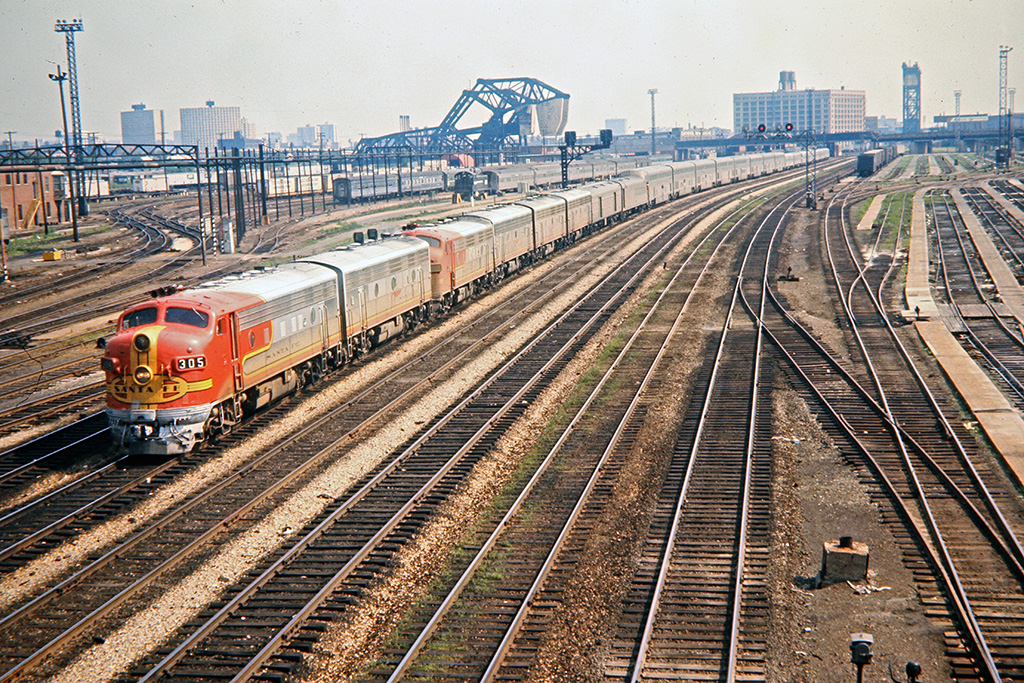
In its early days, Amtrak relied solely on equipment provided by its member railroads. The passenger carrier is barely two months old in this Independence Day view from Chicago in 1971, where train No. 18, the eastbound Super Chief-El Capitan, still looks to the entire world like the Santa Fe train it used to be.
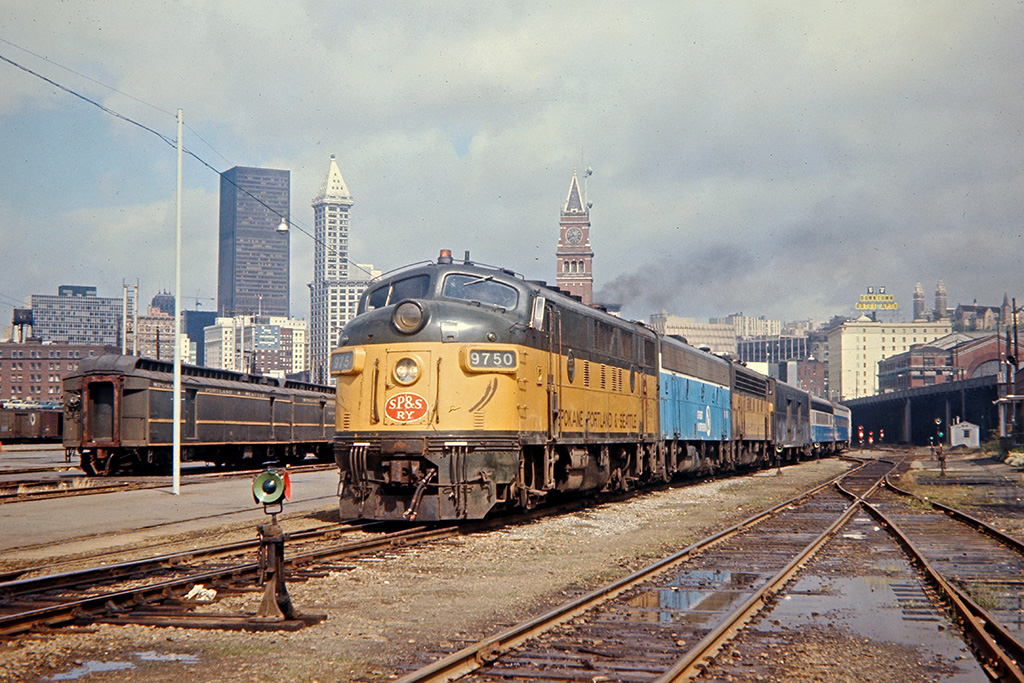
John F. Bjorklund, Collection of the Center for Railroad Photography & Art
Early Amtrak equipment in the Pacific Northwest included a mix from several roads. Here, three F units from the Spokane, Portland & Seattle and the Great Northern, led by SP&S F3 No. 9750, lead a train at King St. Station in Seattle on Sept. 2, 1971.
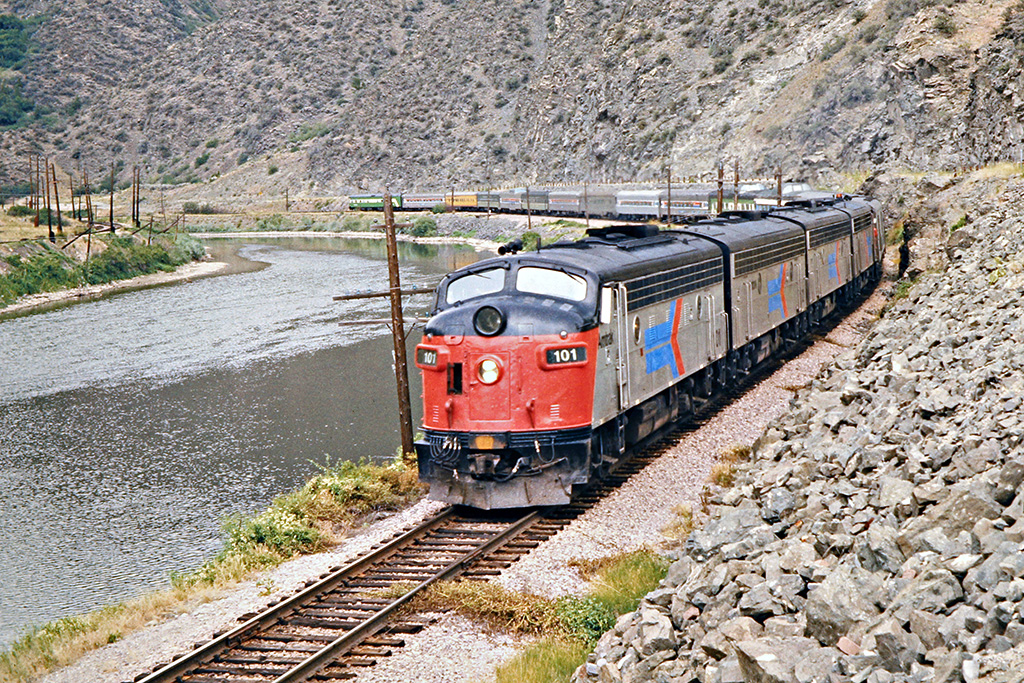
John F. Bjorklund, Collection of the Center for Railroad Photography & Art
The eastbound North Coast Hiawatha runs along the Jefferson River near Whitehall, Mont., on July 21, 1973. EMD F7 No. 101, which Amtrak received from the Burlington Northern, leads a quartet of F units powering the train.
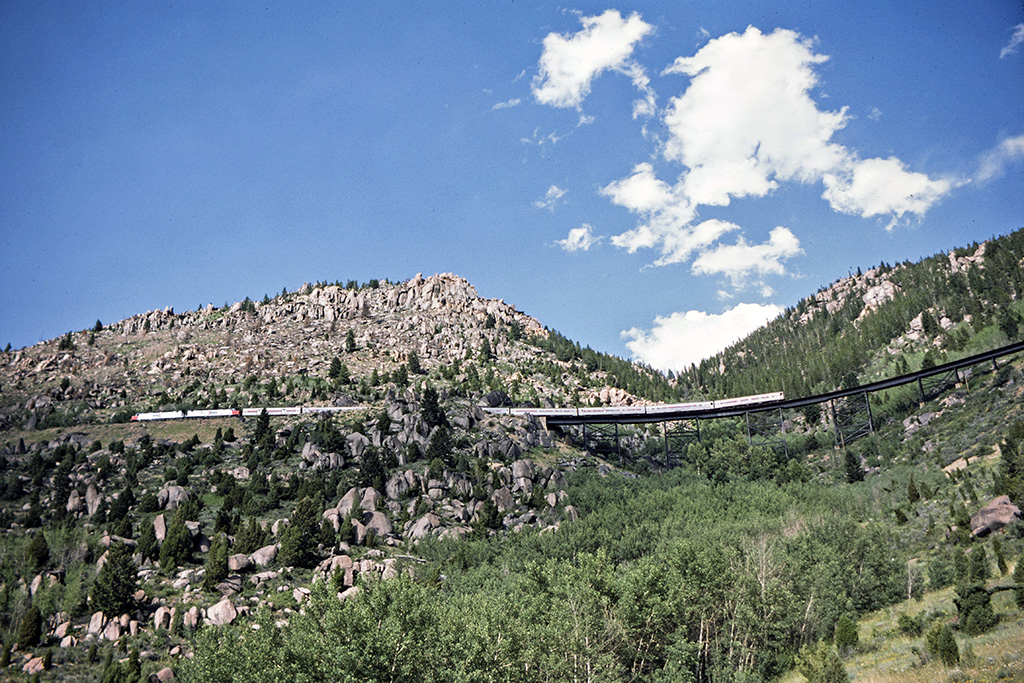
John F. Bjorklund, Collection of the Center for Railroad Photography & Art
The westbound North Coast Hiawatha descends Homestake Pass near Butte, Mont., on Aug. 4, 1975. Taking its names from former Northern Pacific and Milwaukee Road trains, the North Coast Hiawatha operated from 1971 until 1979. Two EMD SDP40Fs lead the train, the first new locomotives built for Amtrak. Mechanically-reliable but derailment-prone at high speed and lacking head end power, they only operated into the early 1980s.
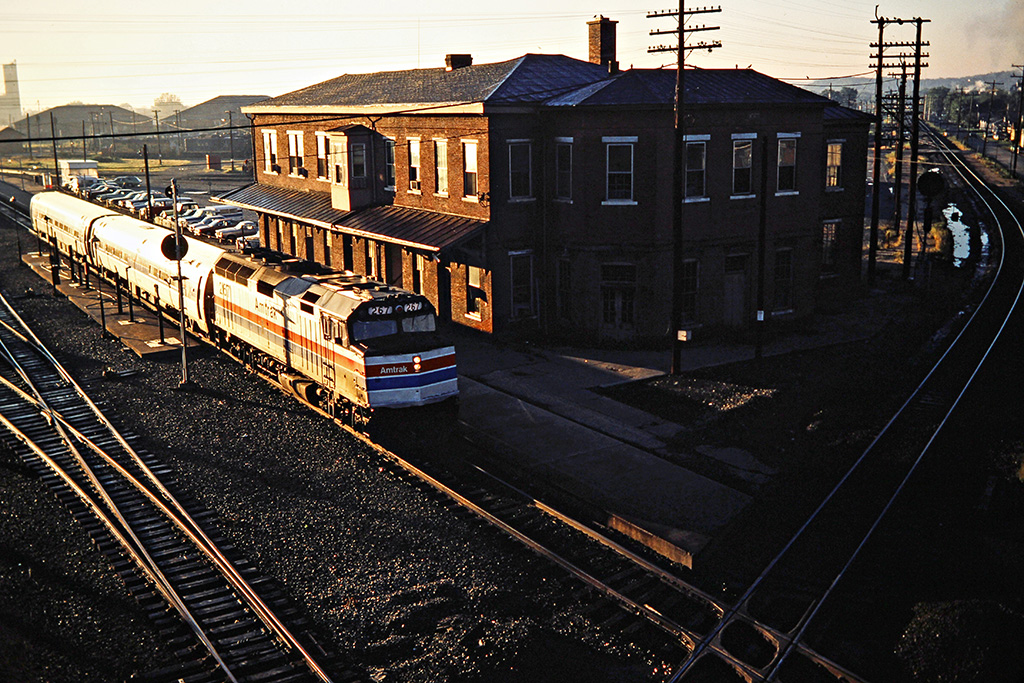
John F. Bjorklund, Collection of the Center for Railroad Photography & Art
The westbound Shenandoah passes the brick station in Chillicothe, Ohio, at sunrise on Sept. 23, 1979. The Washington-Cincinnati train was short-lived, operating only from 1976 to 1981. It is running on the Baltimore & Ohio’s St. Louis main line, about to cross the Norfolk & Western. Norfolk Southern still operates the former N&W route, but the B&O line was abandoned and the station burned down in 2012.
John F. Bjorklund, Collection of the Center for Railroad Photography & Art
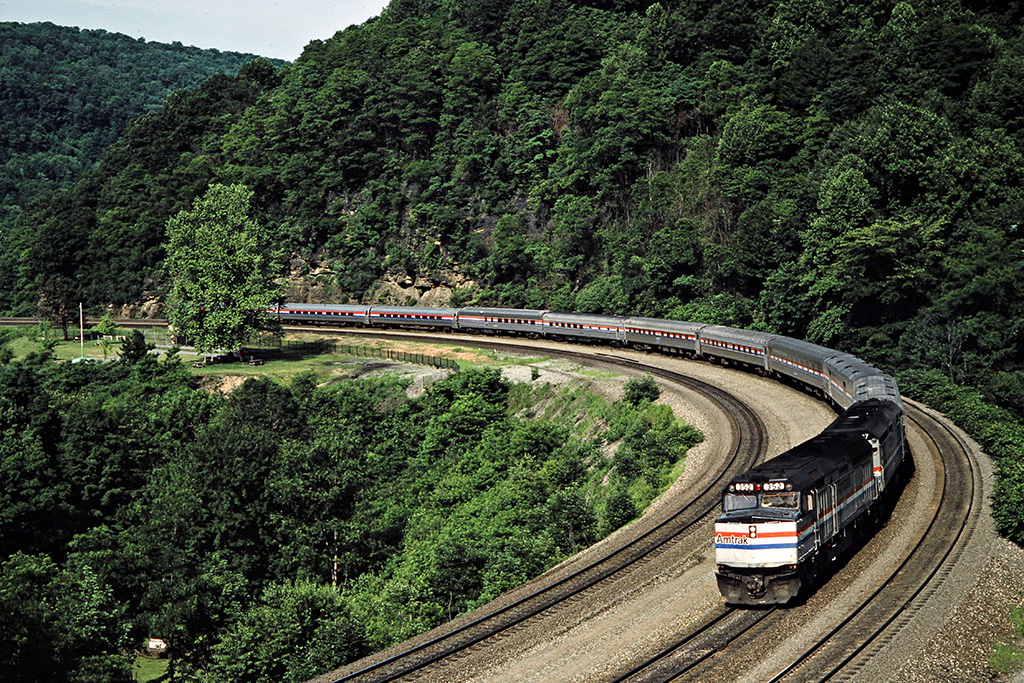
The eastbound Broadway Limited wraps around Horseshoe Curve near Altoona, Pa., on June 22, 1986, on Conrail’s former Pennsylvania Railroad main line – part of Norfolk Southern since 1999. The Broadway was one of Amtrak’s initial trains, and the only one between New York and Chicago when Amtrak commenced operations in 1971. It ran until 1995; today the New York-Pittsburgh Pennsylvanian uses this line, while Amtrak runs trains over two other routes between New York and Chicago.
John F. Bjorklund, Collection of the Center for Railroad Photography & Art
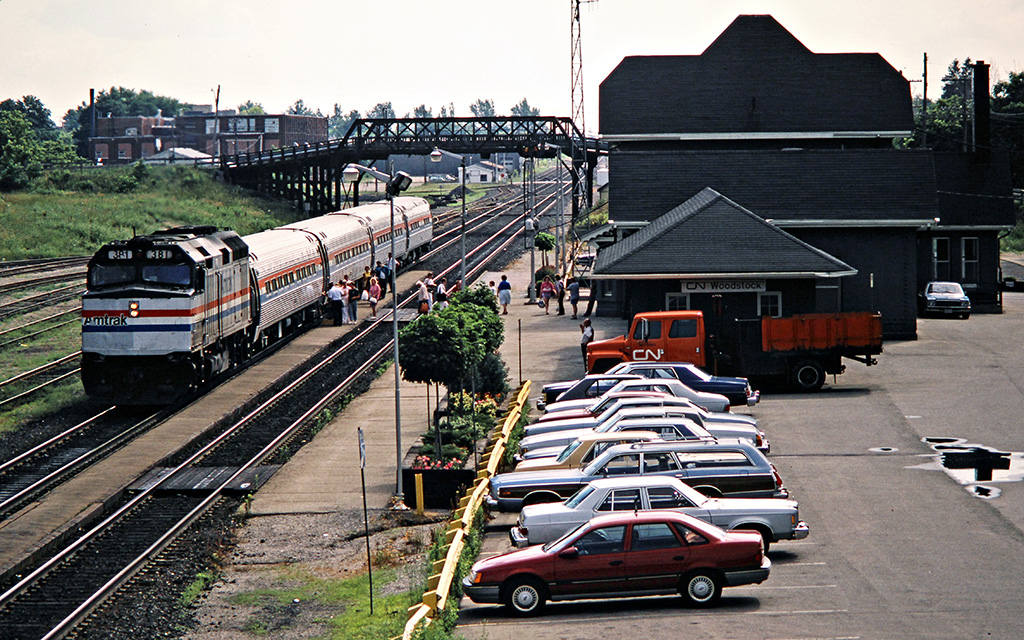
The westbound International Limited makes a station stop on the Canadian National Railway in Woodstock, Ontario, on June 27, 1987. A joint service with VIA Rail Canada, the train operated between Chicago and Toronto from 1982 until 2004.
John F. Bjorklund, Collection of the Center for Railroad Photography & Art
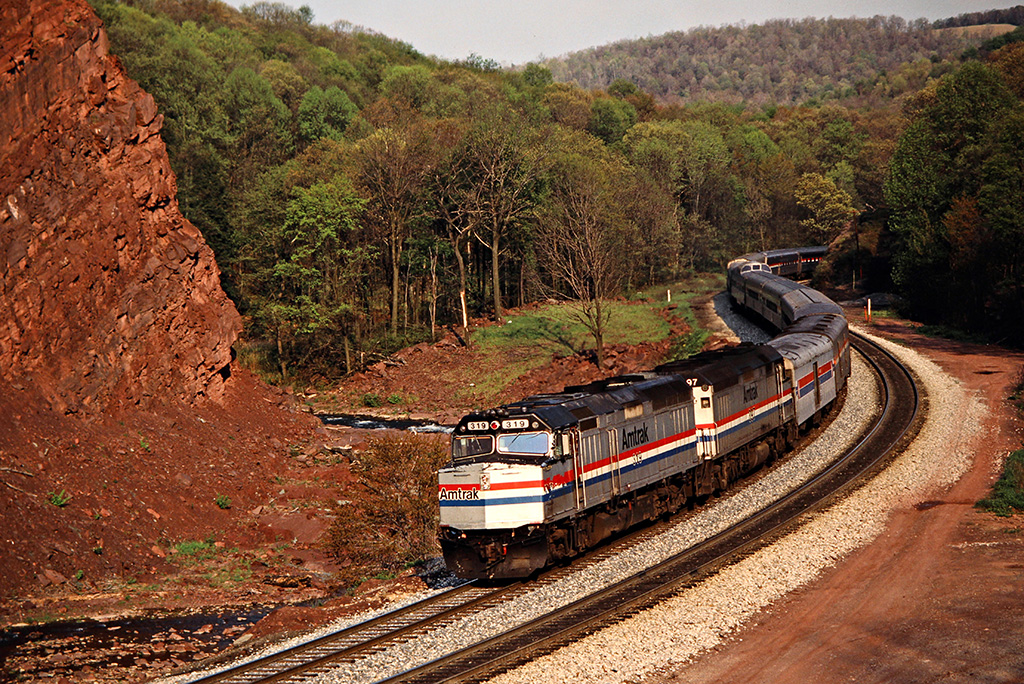
The eastbound Capitol Limited descends Sand Patch Grade on CSX Transportation’s former Baltimore & Ohio main line near Fairhope, Pa., on May 14, 1988. Two EMD F40PH locomotives were standard power at the time, and the train was still using single-level equipment and a dome car. Originally a B&O train, Amtrak did not include the Capitol in its inaugural operating plan but revived the service in 1981.
Congress created the National Railroad Passenger Corp., better known as Amtrak, in 1971 to takeover most of the nation’s long-distance passenger trains. Never intended to be a longterm solution, Amtrak is nonetheless still here, forty-five years later, operating some 300 trains each day and experiencing record ridership on many of its lines. Its board of directors recently announced that Charles W. “Wick” Moorman, former head of Norfolk Southern, would become Amtrak’s next president and CEO. Given his great success at NS, respect within the industry, and appreciation for railroading’s rich history and profound role in the U.S., the announcement brings great hope and excitement to so many of us who love passenger trains.
To mark the beginning of Moorman’s presidency at Amtrak, Trains is working with the Center for Railroad Photography & Art to present this gallery of Amtrak photographs. They come from the Center’s John F. Bjorklund Collection, which consists of 55,000 color slides of railroading throughout the U.S. and Canada from the 1960s into the 2000s. Bjorklund was most active during Amtrak’s first two decades, the 1970s and 1980s, and his images help to show just how far the nation’s rail passenger carrier has come.








 FULL SCREEN