




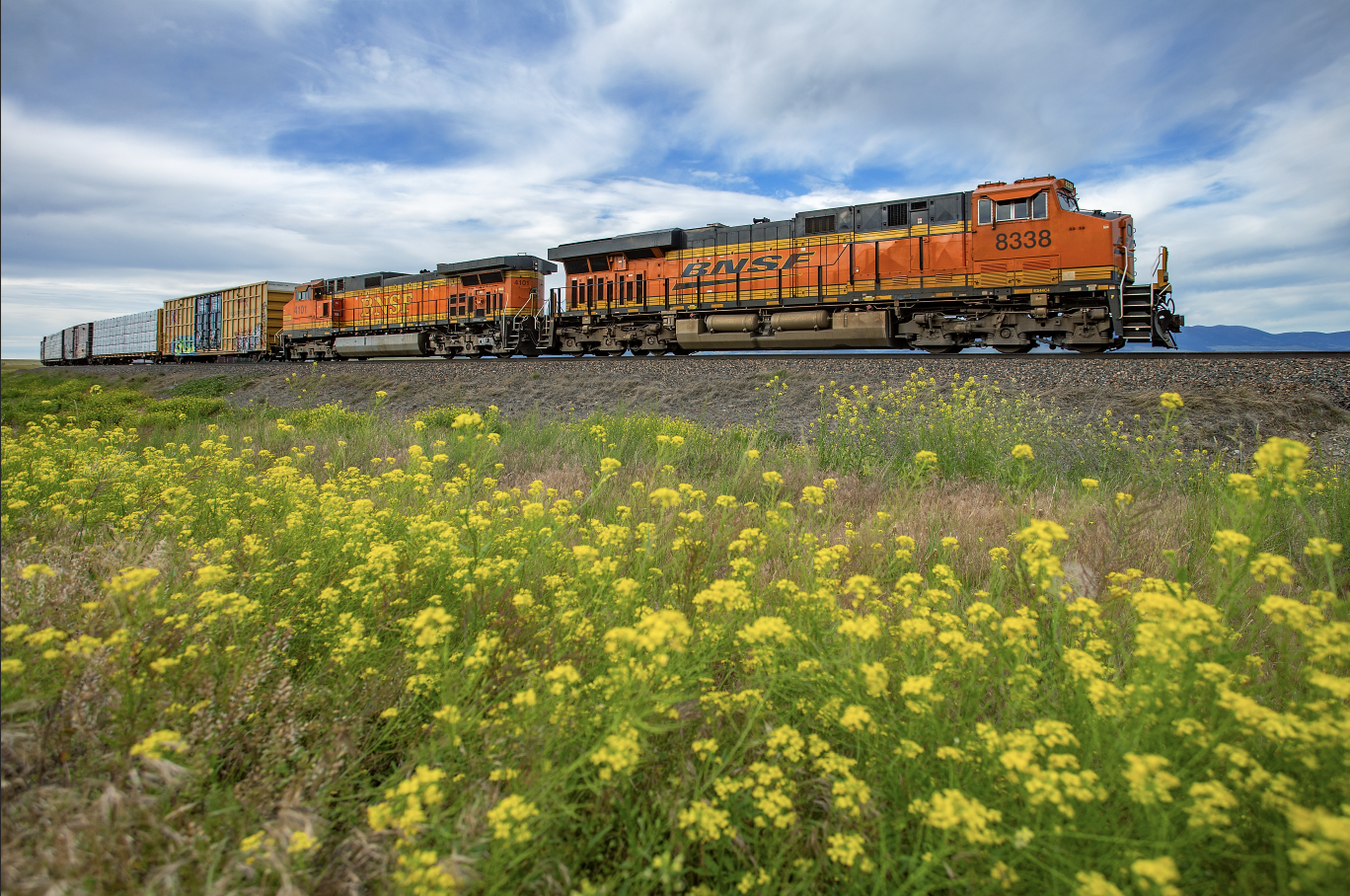
Answer: BNSF Railway uses two models of six-axle locomotives with only four powered axles: GE Transportation’s (now Wabtec Freight) ES44C4 and Progress Rail’s SD70ACe-P4. The two builders have chosen different arrangements for power: GE uses an A1A-A1A arrangement while EMD uses a B1-1B setup.
Translated from the Association of American Railroads wheel arrangement system, letters are powered axles in a row, where A is one axle, B is two, C is three, and so on. Numbers are unpowered idler axles in a row. An A1A truck has an idler axle in between two powered axles while a B1-1B truck has the two axles closest to the fuel tank unpowered.
Both models of locomotives use alternating current for traction. They aim to give railroads the increased reliability of AC traction at the lower power and cost of a direct current locomotive which has all six axles powered.
Having all six axles powered is mostly useful at low speeds. Once at speed, horsepower sets the pace. At low speeds, the ES44C4 automatically shifts some weight off the unpowered axle using a compressed air cylinder, giving the powered axles more weight to increase wheel-rail adhesion. — Tyler Trahan