




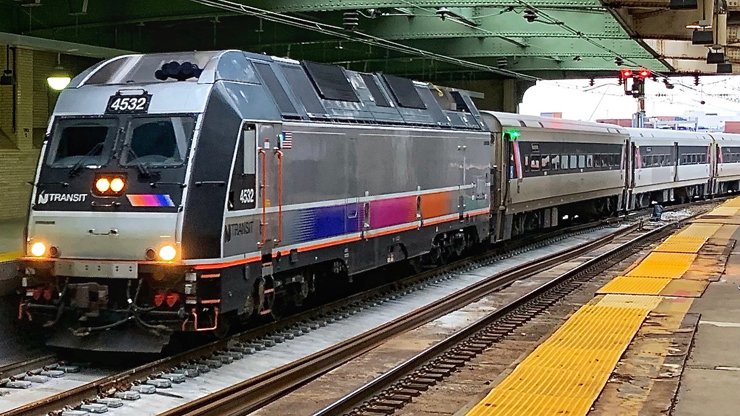
NEWARK. N.J. — In the midst of its 2018 issues with cancelled trains because of a shortage of engineers, a clarion call went out from NJ Transit. Its website employment page asked, “Do you have the right stuff? Start your career as a Locomotive Engineer.” More than 5,000 applications followed.
Jumpstarting the effort to fill its vacancies, the first training class since that call — for 14 assistant conductors who enrolled in NJ Transit’s first conductor-to-engineer training program in October of 2018 — completed classroom instruction and testing on Friday. All 14 will advance to phase two to begin field training for the next half-year. Those who pass will be running trains this fall.
For anyone without rail operations experience, the normal course length will be 20 months. All class training is being conducted at the NJ Transit Rail Operations Center in Kearny, N.J. This class had the advantage of existing familiarity with rail rules and regulations, helping to speed the process of addressing the ongoing problem with cancelled weekday trains. The class is the first of four scheduled to graduate this year, and is one of six concurrent classes, a record for NJ Transit.
“This class of assistant conductors did an incredible job of learning an immense amount of material,’’ NJ Transit Executive Director Kevin Corbett said in a media release announcing the class’ 100-percent pass rate. “The hard work and dedication this class has shown is evident by their impressive success rate. I wish them well on the second phase of their training and look forward to having them operating their own trains in revenue service before the end of this year.”